
Mindful Transitions | Articles
Good Girl Be Gone

Self Recognition,
Self Erasure, and
the Cost of Being "Easy"

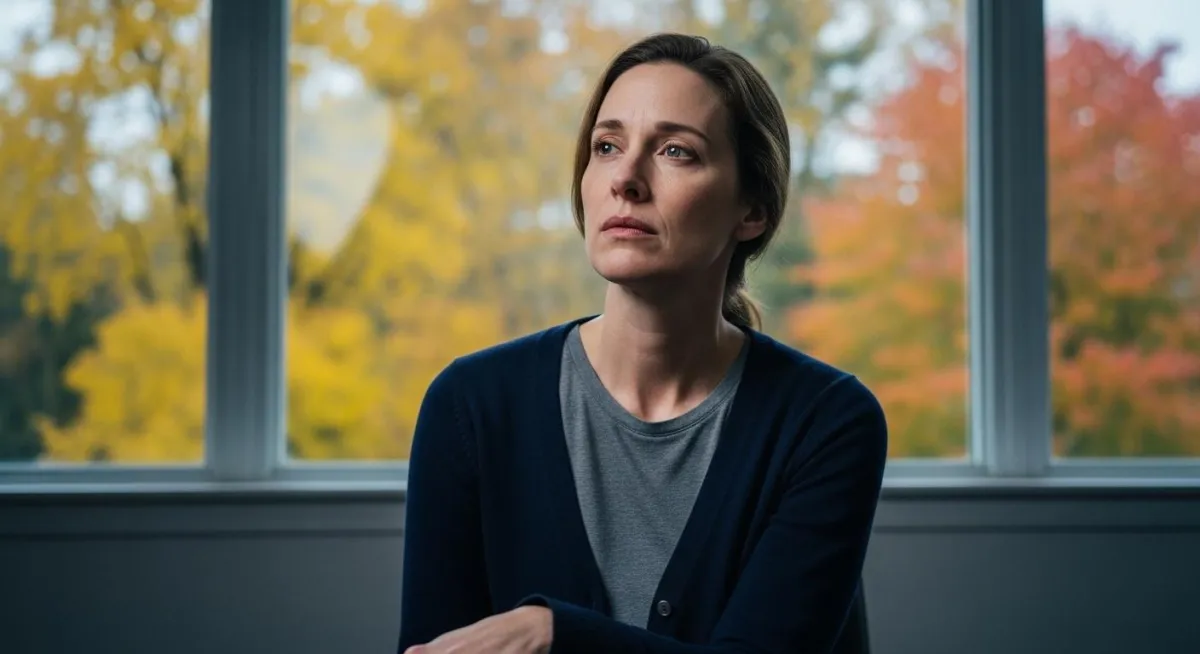
The quiet moment no one sees

By May, the world has stopped asking how you are. The rush of January intentions has faded. Autumn has settled in. And what's left is the truth you didn't have words for earlier.

This is often the month women notice it. Not in a dramatic way. In the small, private moments.

  • The pause before saying yes when you want to say no
  • The tightness in your chest when you realise you've agreed again
  • The strange fatigue that isn't physical but isn't rest solvable either

It's not burnout.
It's self erasureThe gradual silencing of your own needs and voice in order to maintain harmony, often learned as a survival strategy..

And it usually began long before you were aware it had a name.

How being "easy" became a survival strategy

Many women were rewarded early for being low maintenance. For being agreeable. For being capable. For being emotionally steady, even when things were not.

You learned that being "easy" made life smoother. That being strong reduced friction. That not needing too much kept you safe.

And for a long time, it worked.
Until it didn't.

Because strength, when it's built on self abandonment, comes at a cost.

Strength that no longer requires disappearance

The cost is subtle at first:

  • You stop noticing what you feel
  • You talk yourself out of needs before they form
  • You pride yourself on resilience while quietly feeling unseen
"

Self erasure doesn't look like weakness.
It looks like competence.

The grief that follows self recognition

Here's the part few people talk about. When you begin to see how much of yourself you gave away, grief arrives. Not grief for a person but for a version of you who learned to disappear.

You may grieve:

  • The needs you never voiced
  • The younger self who adapted too quickly
  • The relationships that were built on your silence

This grief isn't loud. It's tender. It often shows up as a heaviness in the body, or a quiet ache you can't quite explain.

And it doesn't mean you did anything wrong.

It means your nervous system did exactly what it needed to do, then.
Recognition isn't about blame.
It's about compassion.

Strength that no longer requires disappearance

There is another kind of strength, and it feels different in the body. It doesn't push. It doesn't perform. It doesn't prove. This strength comes from internal safetyA felt sense of being secure within yourself, no longer needing external validation to know you are acceptable..

From allowing yourself to:

  • Pause before responding
  • Feel disappointment without fixing it
  • Stay present with discomfort instead of smoothing it over

When women stop erasing themselves, they don't become louder overnight. They become steadier.

And steadiness is powerful. This is the real shift of "Good Girl Be Gone": not rebellion, but return. A return to yourself.

If something in this landed, not in your head, but in your chest, that matters. Self recognition is not a mindset shift. It's a nervous system one. And it unfolds gently, in its own time. If you're curious to explore this work more deeply, through emotional safety, self trust, and embodied leadership, you're welcome to take a look at what I offer. There's no rush. May is for noticing.

Emotional Load

The Grief of Being
the Strong One

Carrying the emotional load

The weight that goes unnamed

There is a particular kind of tiredness that shows up in May. It isn't solved by sleep. It isn't fixed by time off. It's the fatigue of being the one who holds things together.

  • The organiser
  • The stabiliser
  • The emotional anchor

The one who notices what others don't and quietly adjusts so everything keeps moving. This work is invisible. And because it's invisible, it often goes unacknowledged.

How emotional load becomes identity

Many women don't remember choosing to carry the emotional loadThe invisible mental and emotional work of anticipating needs, managing relationships, and maintaining emotional equilibrium for others.. It emerged naturally.

You became the one who:

  • Anticipates needs
  • Regulates the room
  • Holds space for everyone else's feelings
No longer strong alone

Over time, this role can harden into identity:

I'm the strong one.
I can handle it.
Others need me to be okay.

But strength, when it's unshared, becomes lonely. And loneliness, especially when you're surrounded by people, creates grief.

The grief of not being held

This is a quiet grief. Often unnamed. It's the grief of:

  • Rarely being asked how you are, in a way that allows honesty
  • Being relied on more than you're supported
  • Realising you've been emotionally available while staying internally alone

Many women minimise this grief because "nothing terrible happened."

But grief doesn't require catastrophe.
It requires loss.

And the loss here is mutual holding.

What changes when the bridge becomes visible

The Invisible Bridge isn't something you demolish. You see it.

You notice:

  • When you step in automatically
  • When you over function emotionally
  • When you carry what isn't yours

And slowly, gently, you begin to pause. You allow others to meet you. Or not. You let the discomfort of not rescuing arise. And pass.

"

This is not about withdrawing love.
It's about redistributing responsibility.

When emotional load becomes shared, connection deepens.
When it doesn't, clarity arrives.
Both are forms of integrity.

A steadier way forward

There is nothing wrong with being capable. The work is not to become less strong but to stop being strong alone.

May doesn't ask you to change your life. It asks you to notice what you're carrying. And whether it still belongs to you.

If this resonates, you may find support in the work I share around emotional safety, relational patterns, and embodied leadership. You're welcome to explore it, gently, when it feels right.

Copyright 2026. Mindful Transitions. Designed by Global Influence Agency. All Rights Reserved.

Mindful Transitions, its founder, and associated coaches are not licensed medical or mental health professionals and do not provide medical, psychological, or therapeutic diagnoses or treatment. The information and resources shared on this website are for educational and personal development purposes only and should not replace professional advice or care.

Always consult with your qualified healthcare provider before making changes to your mental health, physical health, or wellbeing routines.
Use of this website, including any of its content, constitutes your agreement to Mindful Transitions [Terms & Conditions] and [Privacy Policy].